 HoopReady
PNG to DST
A DST file is a list of needle movements, not a picture. That is why a PNG cannot be "converted" the way a PNG becomes a JPEG: someone has to decide the stitch direction, the underlay, the order the shapes are sewn in and how much each shape is pulled out of shape by the thread. Below is a real order, and what those decisions changed.

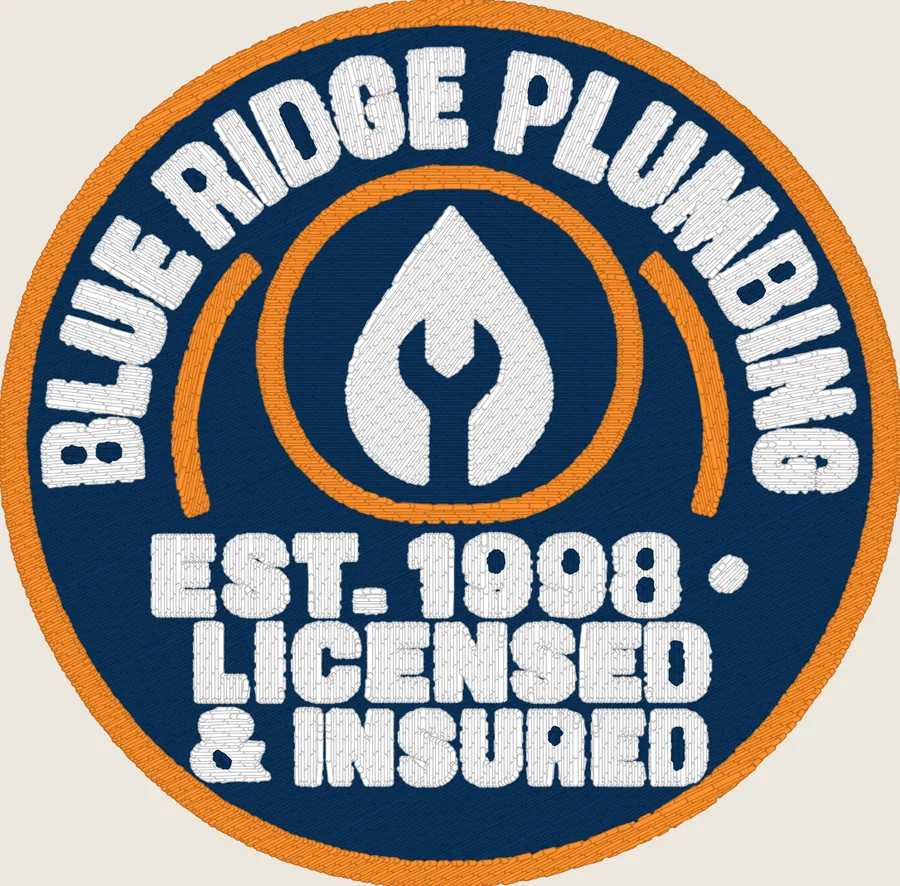
What a DST file actually contains
| The PNG has | The DST needs |
|---|---|
| Pixels and colors | Needle coordinates, in order |
| Anti-aliased, soft edges | Hard edges — thread has no half-tones |
| Any number of colors | One thread per color, changed by hand or by needle |
| No thickness | Lines under about 1 mm cannot be sewn at all |
| No order | Shapes sewn in the wrong order eat each other |
The decisions a tracer cannot make
These are the rules our engine applies, and each one comes from a design that failed without it:
- Stitch order. A shape inside another shape is sewn after the shape around it. Without this the band fill ate the lettering of a crest; with it, the same design went from 48 to 72 out of 100 on a blind checklist.
- Pull compensation. Thread pulls fabric inwards, so shapes are widened slightly — but never below 0.1 mm, or it sews thinner than it looks on screen. Narrow shapes and gaps under 1.6 mm get a floor.
- Lettering is redrawn, never traced. Cap height at least 6 mm on woven fabric, 8 mm on caps and knits, stroke at least 1.8 mm. If the layout does not allow that, the layout changes — the letters do not shrink.
- Thread changes cost money. Stitching enclosed shapes after their container interleaves colors. Sewing same-color objects in a row cut this order from 6 thread changes to 3, with no visible difference in the result.
- Trims. Every object is trimmed after sewing, so no travel threads run across the design.
What a PNG needs before it can be stitched
| Element | Minimum at the ordered size |
|---|---|
| Lettering (redrawn) | 6 mm cap height on woven fabric · 8 mm on caps, knits, towels |
| Lines and outlines | 1.5 mm target; under 1 mm has to be removed or redrawn |
| Smallest detail and gaps | About 1 mm |
| Thread colors | Up to 6; a seventh colour means a redraw or a hand digitizer |
The free check measures exactly these on your own file, at the width you need, before you pay anything.
Where the free converters fall down
They do the one part that is easy — turning colored regions into fill stitches — and skip the parts that decide whether the file sews. In our own tests that showed up as lettering closing in on itself at 5 mm, outlines under a millimetre disappearing, and shapes erasing each other because the stitch order was arbitrary — all measured on stitch simulations, which is also where we fixed them. What a preview image cannot show is how the file behaves under a needle, which is why a person checks every file before it goes out.
What you get
DST for commercial machines and PES for home machines from $9.99; JEF, EXP and VP3 as well from $14.99. Every order comes with the stitch simulation you see above and the thread list that DST itself cannot carry. Delivery takes 1–3 business days, most orders the same day. A digitizer checks every file — the engine drafts it, a person approves it.
What a change round covers, how long the queue is today, what we do not do and how the price compares with other embroidery digitizing services.
Check your PNG freeSee pricing
Questions
- Can I convert a PNG to DST for free?
- You can run a PNG through a free tracer, and it will produce a DST. What it cannot do is decide stitch direction, underlay, pull compensation and stitch order, which is what makes a file sew cleanly. In our tests that showed up as closed-in lettering, lost outlines and shapes eating each other.
- Why can't a PNG simply be converted?
- A PNG stores pixels. A DST stores needle movements: where the needle goes, in what order, with what stitch type. Nothing in the PNG says any of that, so it has to be decided — by software, by a digitizer, or both.
- What size does lettering need to be?
- At least 6 mm cap height on woven fabric and 8 mm on caps, knits and towels. Below that the letters close up. We measured this: traced text was garbled at 5 mm and still weak at 10 mm, so all lettering is redrawn rather than traced.
- Which machines take DST?
- DST is Tajima's format and the common one for commercial machines — Tajima, Barudan, ZSK, SWF and most multi-needle machines. Home machines usually want PES (Brother, Baby Lock), JEF (Janome), EXP (Melco, Bernina) or VP3 (Husqvarna, Pfaff). Basic covers DST and PES; Standard and above include all five.
- Does DST carry the thread colors?
- No. A DST file has colour-change commands but no colour information, so the thread list travels beside the file. We send it with every order, and the other formats keep their own colour data.
Every image on this page is a stitch simulation produced by our own engine, not a photograph of a sewn garment.