 HoopReady
Logo to embroidery
Your logo was drawn for screens and print, where a line can be a tenth of a millimetre wide and a colour can fade into another. Thread does neither. Turning a logo into embroidery is not a conversion but a redrawing, to a set of physical minimums, and this page is that set of minimums written out — what changes, what has to go, and what you get to approve before any of it is final.
Two different things are called “logo to embroidery”
Before anything else, which of these do you need? The words are the same and the products are not related.
| What you want | What it is called | Do we make it |
|---|---|---|
| A logo that looks embroidered, for a mockup, a product page or a pitch deck | An image effect | Not us. A design tool or a filter does this in seconds and no thread is involved. |
| A file to hand to an embroiderer, or to load on your own machine | A machine file | Yes. That is the whole of what we make: Basic upwards, from $9.99. |
| A picture of what the logo will look like as stitches, before anything is sewn | A stitch simulation | Included, and it is a by-product rather than the product: it is drawn from the machine file itself. |
If you are in the first row, stop here — you will be happier and poorer by nothing. The rest of this page is for the second.
What your logo gives up on the way
Each row below is a rule the artwork is prepared to before it is digitized, and each one is a line in the file our prep step reads. They are not house style. They are what a needle and a thread can do at the size you are stitching.
| In your logo | What it becomes |
|---|---|
| Gradients, tints and soft shadows | Flat solid colour, at most 6 of them. Thread has no opacity: a 40% tint of the brand blue is either the brand blue or a second thread. |
| Anti-aliased edges | Gone. Every edge becomes a decision about where one thread stops and the next begins. |
| Hairlines and thin rules | Thickened to at least 1.5 mm, or removed. Below about 1 mm a line is a row of needle holes rather than a line. |
| Small detail and tight gaps | Detail under 1 mm is merged away and gaps narrower than 1 mm are opened, because the fabric closes them anyway. |
| Wide smooth bands | Anything over 7 mm stops being one satin stitch and becomes a fill, which catches the light differently along its length. |
The smallest of these is the one that decides everything else: nothing under 1 mm survives, so a logo with fine detail does not get simplified a little at small sizes — it gets simplified a lot, or stitched bigger. That is a conversation to have before the order, and the free check starts it by measuring the thinnest line in your artwork in about a second.
Lettering is re-set, never traced
Any words in your logo are redrawn in an embroidery letterform rather than traced from the image, because traced letters break down exactly where they matter: the joins thin out, the counters close and the whole word turns into a smudge at chest size. The minimums:
When a line of text cannot reach those sizes where it currently sits, the rule is to change the layout instead of shrinking the letters — widen the text band, make the central graphic smaller, use more of the circle, move a line into a straight banner. It is the one place where we deliberately do not keep your logo's proportions, and it is why you approve a prepared-art preview before anything is digitized. How small lettering can go is covered on the PNG-to-DST page.
Brand colour is not thread colour
A brand guide names colours in hex or Pantone, which describe light. Thread is dyed polyester in a finite range, and the same spool looks different on a white polo and a navy cap. Two consequences are worth knowing before you order rather than after:
What you send, and what comes back
Send the best version of the logo you have: PNG, JPG, PDF or SVG, up to 20 MB, vectors up to 8 MB. AI and EPS we cannot read — export one of the four. The free check answers in about a second with the colour count, the thinnest line and whether it is ready; it is the same measurement the order uses, so it does not change its mind after you pay.
Delivery takes 1–3 business days, most orders the same day. What arrives in the folder, what a change round covers and who owns the result are all on the digitizing services page, in numbers.
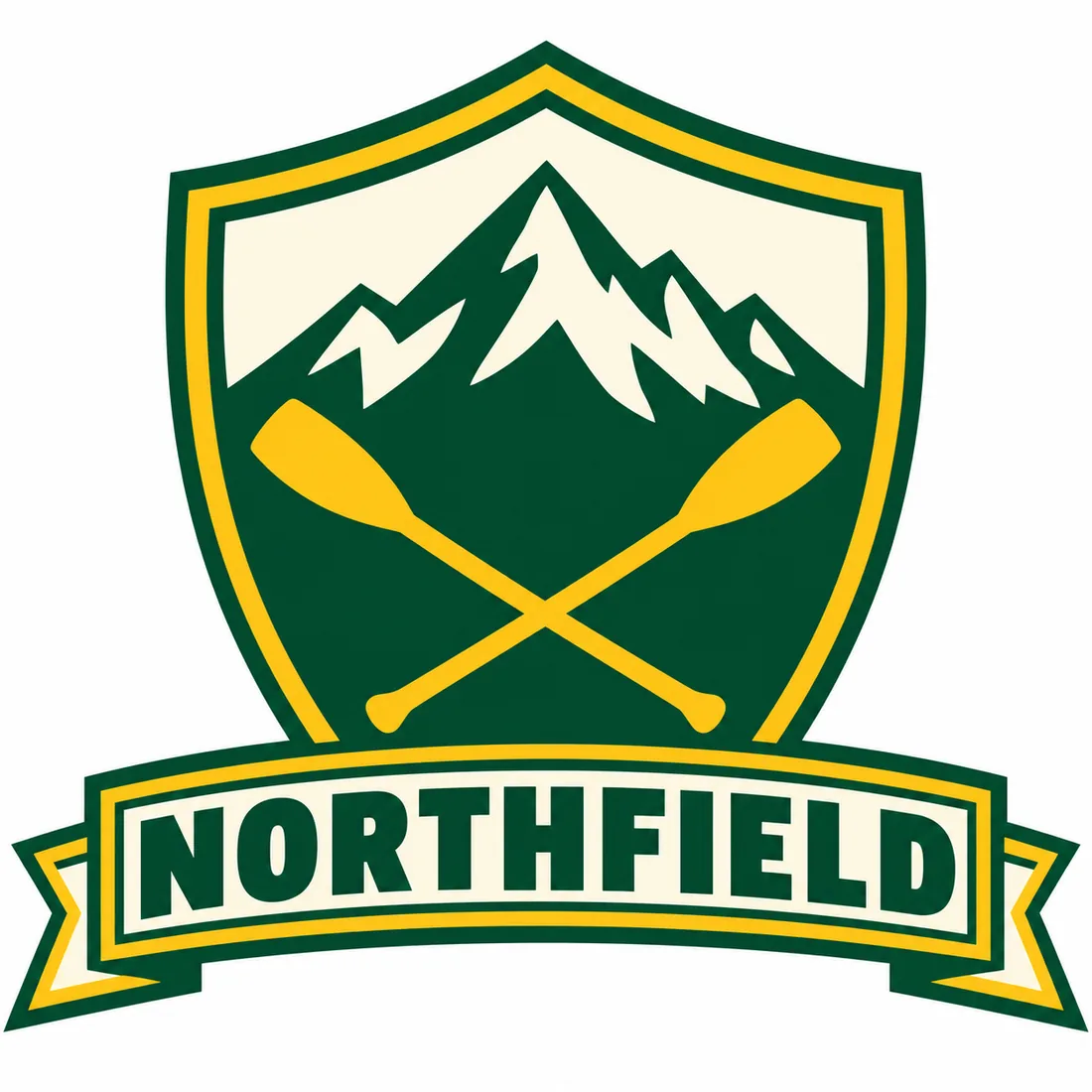
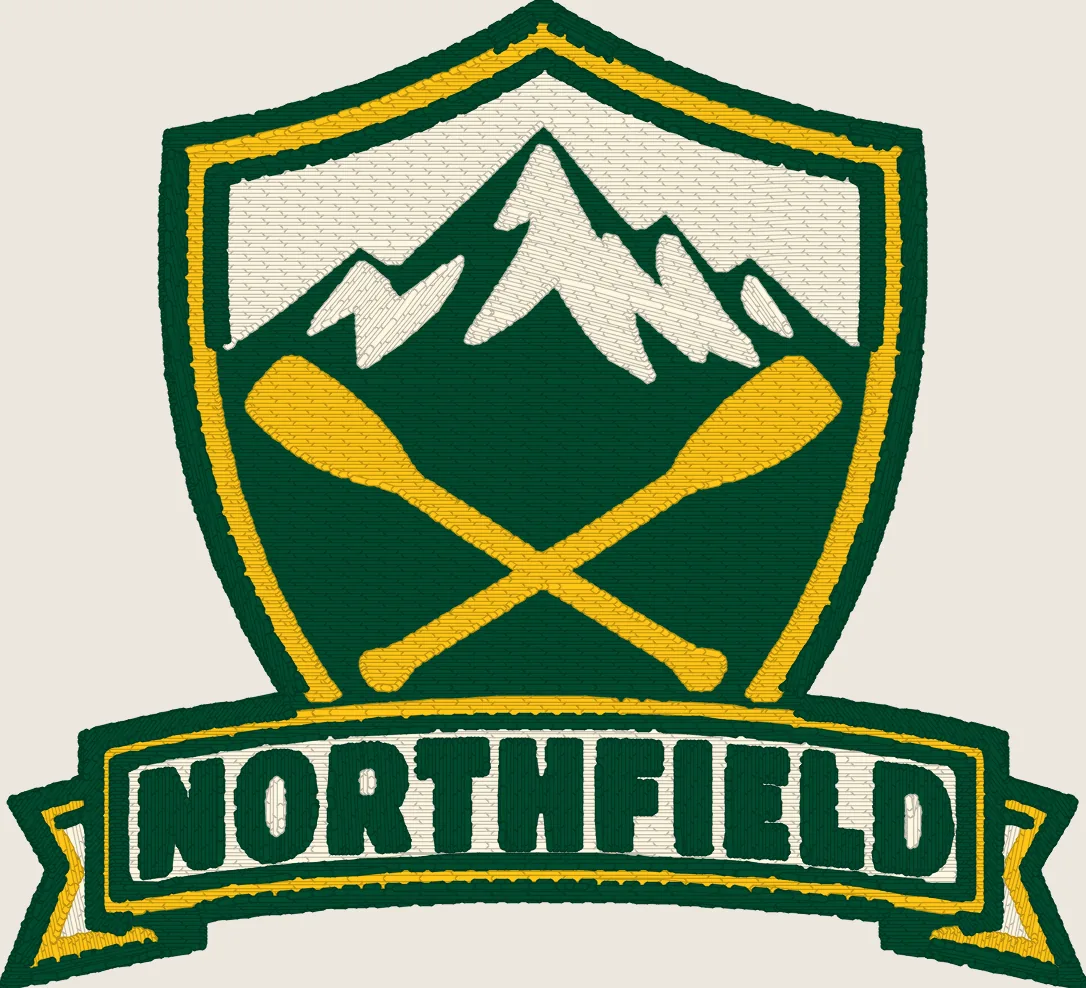
Every figure on this page is read from the files this site runs on: the minimums from the prep rules our own engine and checker share, the crest from a real run on rule set 1.3. The stitch pictures are simulations produced by that engine. Nothing here has been sewn on a machine, which is also why the delivery mail asks you to test on a scrap of the real fabric before the final run.
Questions
- I just want a mockup of our logo embroidered on a shirt. Can you do that?
- Not as a product. What you would get from us is a stitch simulation of a real machine file, which is a truthful picture but a plain one — it has no shirt behind it, no folds and no studio light. If the image is the deliverable, a design tool's embroidery effect will serve you better and cost nothing.
- Our logo is a vector. Doesn't that make it automatic?
- No, and the reason is worth knowing: a vector says where the shapes are, which is the easy half. Stitch direction, underlay, the order the shapes are sewn in and how much each one is pulled out of shape by the thread are not in the file, and no format carries them. Vector art does help in one concrete way — it can be checked and rebuilt at any size without the edge noise a screenshot brings. We read PDF and SVG directly in the free check, at up to 8 MB; we cannot read AI or EPS, so export one of those two.
- Will the thread match our brand colours exactly?
- Usually not exactly, and the mismatch is physical rather than a matter of care. A hex value or a Pantone reference describes light; thread is dyed polyester from a finite range, and the same spool reads differently on a white polo and a navy cap. What we deliver is a thread list naming the colour used for each block, so your embroiderer can match spools to it. One format detail follows from this: VP3 carries exact RGB, while PES and JEF snap each colour to the machine's own palette, and DST carries no colour at all.
- The tagline under our logo is tiny. Will it survive?
- It survives by getting bigger, or it goes. Capitals have to reach 6 mm on woven fabric and 8 mm on a cap, knit or towel. When a line cannot reach that where it sits, the rule is to change the layout — widen the band, shrink the central graphic, move the line to a straight banner — rather than shrink the letters, and you approve that redrawn artwork before anything is digitized. If the tagline genuinely does not belong at the size you are stitching, the honest answer is to drop it for that placement and keep it for the print.
- Is a PNG off our website good enough, or do you need the original?
- The original is better and a website PNG is often fine. What matters is not the format but whether the edges are clean and the colours are flat: a 200 px logo scaled up carries compression noise that reads as extra colours, and the free check counts colours. Send the best you have, get the answer in about a second, and the check will say if it is too soft to work from. Files up to 20 MB, as PNG, JPG, PDF or SVG.
- Our logo has six colours. Which package does that need?
- Standard or above. Basic is capped at 5 thread colours and up to 100 mm wide; the ceiling across every package is 6 colours, because past that a design stops being readable at garment size and starts costing thread changes. The free check counts the colours in your artwork before you pay, so this is never a surprise on the invoice.